

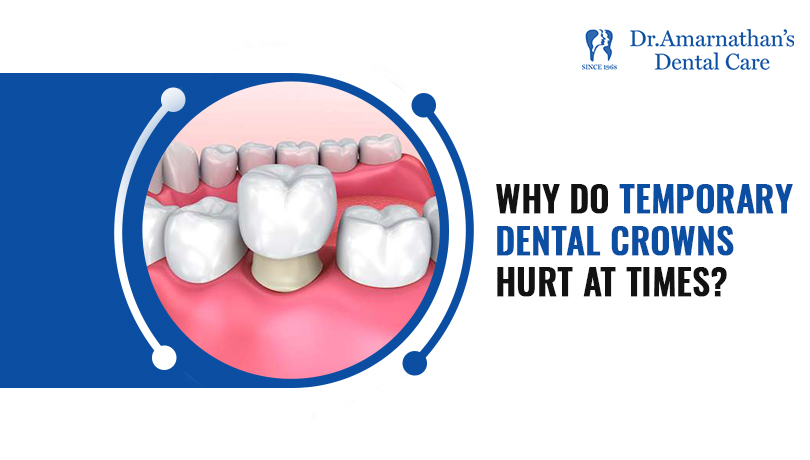
Dental crowns are recommended when a filling can no longer repair a tooth, or when a broken, cracked, or severely decayed tooth needs to be restored in shape and function. If you’ve had Root Canal Treatment (RCT), you’re also familiar with the crown used to seal the access point after the infected pulp is removed.
In most cases, a temporary crown – also called an interim or provisional crown — is placed over the prepared tooth for a few weeks while the permanent crown is being fabricated in a dental laboratory. Some discomfort in this period is common and, in most situations, there’s no cause for alarm.
In this guide, our prosthodontists explain the causes of temporary crown pain, what’s normal vs. what isn’t, a day-by-day recovery timeline, and the most effective ways to find relief.
Why do dentists place temporary crowns?
The temporary crowns also mimic the shape of your teeth whilst they are quite fragile when compared to permanent ones. The temporary crowns are not prepared with the constituents of permanent crowns; hence, the interim crowns have a rough texture and can be noticed easily.
As fabricating tailor-made dental crowns takes at least a week, dentists place the temporary coverings using easy-to-remove adhesives. The provisional crowns are responsible for the following things until the permanent crowns are placed:
- Protecting the tooth’s treated regions
- Help the patient to eat and chew
- Prevent sensitivity in the repaired tooth
- Maintain spacing between the treated tooth and its adjacent teeth
In the meantime, the temporary crowns help dentists comprehend the functioning of the crown going to be placed.
What are the possible causes of temporary crown pain?
The pain in temporary crowns stems from infections in the treated tooth, poor crown craftsmanship, and so on. The primary causes of such pain in the temporary crowns include:
Improper Crown Fit or High Bite
Temporary crowns don’t fit as precisely as permanent ones, but they must still align reasonably with your bite. If the crown sits too high, it creates uneven pressure every time you bite down – causing a persistent toothache and even strain in the jaw, neck, and shoulders. If your bite feels “off” after placement, let your dentist know. A simple adjustment can resolve this quickly.
Dentin Sensitivity After Tooth Preparation
When your dentist reshapes a tooth to accommodate a crown, some of the outer enamel is removed. This exposes the dentin layer underneath, which contains microscopic tubules that lead directly to the tooth’s nerve. This is why patients feel sharp sensitivity to cold, hot, or sweet foods after crown preparation – even when everything has gone perfectly well.
Infection Inside the Tooth
This is most common in patients who received a temporary crown following root canal treatment. Although RCT removes infected pulp, there is a small chance bacteria can re-colonise the cleaned space before the permanent crown seals the tooth. Signs include worsening pain, swelling, or a bad taste – all of which warrant an urgent call to your dentist.
Sore or Irritated Gums
Gum irritation after crown placement is very common as the surrounding tissue adjusts to the new prosthetic. If you already have sensitive gums due to gingivitis, gum disease, or poor oral hygiene, placement can aggravate the area further. Over time, receding gums can expose the tooth root – one of the most sensitive areas of any tooth – increasing discomfort around the crown.
Teeth Grinding (Bruxism)
Temporary crowns are significantly more fragile than permanent ones and are not designed to withstand the forces of grinding or clenching. If you have bruxism – even mildly, pressure during sleep or stress can cause sharp pain and increase the risk of the crown cracking or dislodging. A nighttime mouth guard is strongly advisable while wearing a temporary crown.
Jaw Muscle Strain (TMJ-Related Pain)
Extended time with the mouth open during the procedure can strain the muscles and joints of the jaw. If the temporary crown slightly alters your bite, it can also cause compensatory muscle tension in the jaw, neck, and shoulders. This type of pain is often described as a dull ache that worsens by the end of the day. It typically resolves once the bite is corrected.
Day-by-Day Pain Timeline: What’s Normal?
| Period | What to Expect | Status |
| Day 1–2 | Mild throbbing, soreness when biting, sensitivity to hot/cold. Gums may feel tender. | Normal |
| Day 3–7 | Sensitivity should begin decreasing. Biting feels more natural. Gum soreness fades. | Normal |
| Week 2 | Discomfort should be minimal. Occasional mild sensitivity to temperature is acceptable. | Normal |
| Beyond 2 Weeks | Pain persisting or worsening beyond two weeks requires a dental evaluation. | See Dentist |
| Any Time | Severe throbbing, swelling, fever, or a bad taste in the mouth. | Call Immediately |
Conclusion:
Whether a temporary or permanent crown, mild discomforts are not uncommon after the crown placement. If you notice the pain intensifies or exists for more than 2 weeks, consult your dentist.
If the temporary crown pain arises due to innocuous factors, dentists recommend numbing gels, Over the Counter Pain relievers, and nighttime mouth guards to mitigate the pain.
Likewise, home remedies like gargling with salt water and applying ice packs also provide the relief you want from pain in your temporary crowns.