

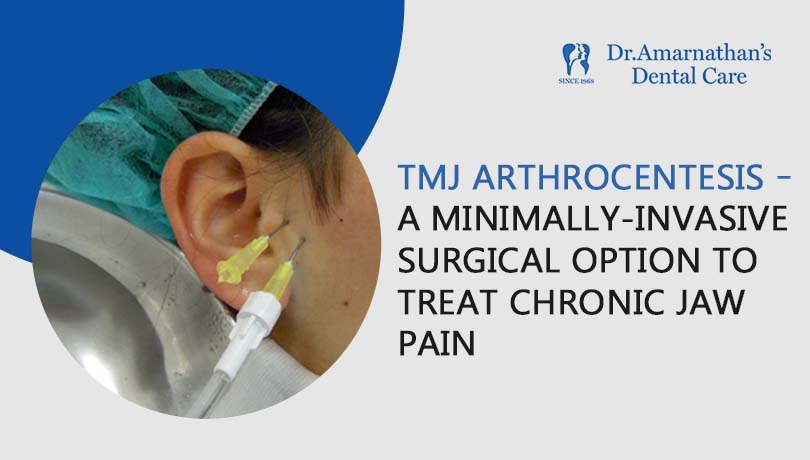
Chronic jaw pain is often linked to problems in the temporomandibular joint (TMJ), which connects the lower jaw to the skull and allows essential movements like speaking, chewing, and opening the mouth. When this joint becomes inflamed or restricted, it can lead to persistent pain, stiffness, clicking sounds, and difficulty in jaw movement.
While mild TMJ disorders can often be managed with pain relievers, muscle relaxants, bite splints, and jaw exercises, severe or long-standing cases may not respond to conservative treatments. In such situations, dental specialists may recommend advanced procedures like TMJ arthrocentesis as a minimally invasive surgical option to relieve pain and restore jaw function.
What is TMJ Arthrocentesis?
Arthrocentesis TMJ is a minimally invasive surgical procedure used to treat temporomandibular joint disorders by flushing out inflammatory fluids from the joint space.
It is also known as joint lavage or joint aspiration. The procedure helps remove inflammatory mediators and improves jaw mobility by reducing pressure inside the joint.
Unlike open joint surgery, TMJ arthrocentesis does not involve large incisions, making it a safer and quicker recovery option for many patients.
When is TMJ Arthrocentesis Recommended?
Dentists may suggest TMJ arthrocentesis when conservative treatments fail to relieve symptoms such as:
- Chronic jaw pain
- Difficulty in mouth opening (jaw locking)
- Joint stiffness
- Clicking or popping sounds in the jaw
- Limited jaw movement
- Inflammation of the TMJ
It is typically recommended for moderate to severe TMJ disorders that do not improve with non-surgical treatments.
TMJ Arthrocentesis Procedure Step by Step
TMJ arthrocentesis is usually performed under local anesthesia and takes a short duration.
Step 1: Anesthesia
The area near the jaw joint is numbed to ensure a pain-free procedure.
Step 2: Needle Placement
Two small needles are inserted into the TMJ space, usually just in front of the ear.
Step 3: Joint Irrigation
A sterile solution such as saline is flushed into the joint to remove inflammatory fluid, debris, and adhesions.
Step 4: Fluid Removal
The excess fluid is simultaneously drained out through the second needle.
Step 5: Optional Medication
In some cases, anti-inflammatory medications may be introduced into the joint space to reduce swelling and improve healing.
How TMJ Arthrocentesis Helps Reduce Jaw Pain
TMJ arthrocentesis works by cleansing and decompressing the joint space, which improves overall function. It helps in:
- Reducing inflammation inside the joint
- Improving joint lubrication and movement
- Breaking down adhesions within the TMJ
- Restoring smoother jaw motion
- Reducing pain and stiffness
By removing inflammatory substances, the procedure allows the jaw joint to function more comfortably and efficiently.
Advantages of TMJ Arthrocentesis
TMJ arthrocentesis offers several benefits compared to open surgery:
- Minimally invasive procedure
- Quick recovery time
- Reduced post-operative discomfort
- No major surgical incision
- Improved jaw mobility
- Outpatient procedure in most cases
Because of these advantages, it is often considered a preferred surgical option for TMJ disorders.
Possible Side Effects and Risks
Although TMJ arthrocentesis is generally safe, some temporary side effects may occur, including:
- Mild swelling near the jaw joint
- Temporary numbness
- Slight discomfort or pain
- Bruising around the treated area
- Difficulty in jaw movement for a short period
Rare complications may include infection or temporary facial muscle weakness, but these are uncommon when performed by an experienced specialist. Proper aftercare is essential to ensure smooth healing and reduce complications.
Aftercare Instructions
After TMJ arthrocentesis, patients are usually advised to:
- Avoid excessive jaw movement for a few days
- Eat soft foods
- Apply cold compress if swelling occurs
- Take prescribed medications regularly
- Follow jaw exercises as recommended by the dentist
- Attend follow-up visits
TMJ Arthrocentesis vs Other Treatments
For severe TMJ disorders, treatment options may include:
- Jaw exercises and physiotherapy
- Bite splints or occlusal guards
- Medications (pain relievers and muscle relaxants)
- TMJ arthroscopy
- Open joint surgery
Among these, TMJ arthrocentesis is considered the least invasive surgical option, offering effective relief without the complexity of major surgery.
When Should You Visit a Dentist?
You should consult a dentist if you experience:
- Persistent jaw pain
- Difficulty opening or closing the mouth
- Clicking or locking of the jaw
- Facial pain near the ear or temples
- Pain that does not improve with medication
Early diagnosis and treatment can prevent worsening of TMJ disorders.
Conclusion
TMJ arthrocentesis is a safe, minimally invasive procedure designed to treat chronic jaw joint problems by flushing out inflammation and improving joint mobility. It is especially beneficial for patients who do not respond to conservative treatments.
While it is not suitable for every case, it offers a reliable option for reducing pain, restoring function, and improving quality of life in TMJ disorder patients. Proper diagnosis, expert evaluation, and post-treatment care are essential for achieving the best results.
About the Author
Dr. A. Suresh, BDS, is a senior dental surgeon at Dr. Amarnathan Dental Care with over 30 years of experience in preventive and restorative dentistry. He specializes in managing TMJ disorders, chronic jaw pain, and advanced dental treatments, helping patients achieve long-term oral health and comfort.